Role of Internet in Communication
Published: 19 Dec 2025
Every day in 2025, more than 6 billion people around the world use the internet to talk, share, work, and learn, linking lives across continents. Nearly 95 percent of internet users engage with messaging and social platforms, and billions rely on email for both personal and professional communication.
In this article I’ll explain the role of the Internet in communication, the main tools people use, how it affects relationships and business, the pros and cons, and what trends are just over the horizon.
Evolution of Communication
The evolution of communication moved from slow, one-way methods like letters and newspapers to fast, interactive tools powered by the internet, allowing people to connect instantly and making communication an essential part of modern life.
To see this change clearly, the timeline below highlights key stages in the evolution of communication:
- Before 1900: Letters, messengers, and face-to-face communication
- Early 1900s: Telephone, radio, and print media
- Mid-1900s: Television and mass broadcasting
- 1970s to 1980s: Computer networks and early email
- 1990s: World Wide Web, websites, and online forums
- 2000s: Social media and instant messaging
- 2010s to today: Mobile internet, video calls, and real-time global communication networks
This steady evolution explains why internet-based communication now shapes personal life, business, education, and global connections.
Internet Communication Tools
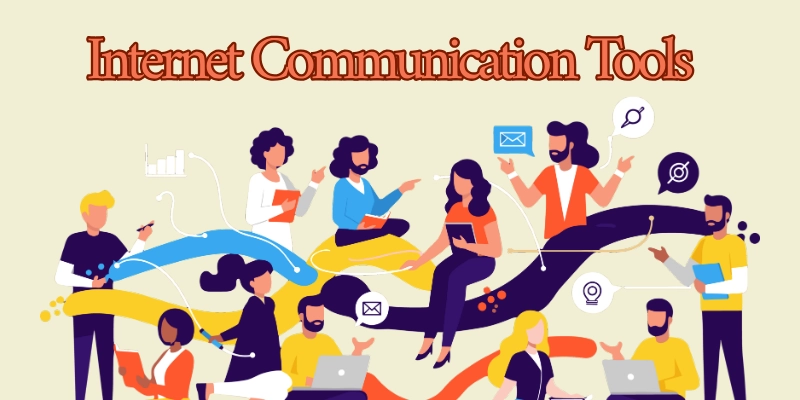
The role of the Internet in communication becomes clear when we look at the tools people use every day. Each tool serves a different purpose, yet all aim to make communication faster and easier.
1. Email
Email allows users to send written messages and files through the internet. People mainly use it for formal and professional communication. Businesses still rely on email for records and official updates. Its biggest strength is reliability and documentation.
Its main limitation is slow response compared to chat apps. In 2025, over 4.5 billion people use email worldwide, especially for work and education.
To better understand how email fits into daily communication, consider these key points:
- Commonly used for contracts, reports, and official notices
- Supports large file sharing and message history
- Works across all devices and platforms
2. Instant messaging
Instant messaging apps let users send text, voice notes, images, and files in real time. People use them for quick personal and team communication. The main strength is speed and ease of use. The limitation is constant interruptions and message overload. Most internet users now spend more daily time on messaging apps than on email.
This growing use highlights several important aspects:
- Enables group chats for families and work teams
- Offers read receipts and typing indicators
- Encourages informal and fast conversations
3. Social networks
Social networks connect users through profiles, posts, and interactions. People use them to share updates, news, and opinions. Their strength lies in reach and engagement. Their limitation is privacy risk and misinformation. In 2025, social platforms reach over 5 billion active users globally.
These platforms also shape communication in other ways:
- Help brands and creators reach wide audiences
- Allow real-time reactions and comments
- Influence public opinion and trends
4. VoIP services
VoIP allows users to make voice calls over the internet. Apps like internet calling services replace traditional phone calls. The main strength is low cost, especially for international calls. The limitation is call quality during poor internet connections.
In daily use, VoIP services also:
- Support voice and video calling in one app
- Reduce phone bills for businesses
- Depend heavily on stable internet speed
5. Video conferencing
Video conferencing tools support face-to-face communication through video and audio. Businesses and schools use them for meetings and classes. The strength is real time visual interaction. The limitation is fatigue and heavy data use. Remote work growth keeps this tool in high demand.
This tool also plays a key role by
- Supporting remote interviews and training
- Enabling screen sharing and presentations
- Connecting teams across time zones
6. Forums
Forums host topic-based discussions where users post questions and replies. People use them for advice, learning, and community support. The strength is detailed discussion. The limitation is slow interaction compared to live chats.
Forums continue to matter because they:
- Store long-term knowledge and solutions
- Encourage thoughtful and detailed answers
- Build niche interest communities
7. Blogs
Blogs publish long-form written content online. Writers use them to share knowledge and opinions. The strength is depth and control over content. The limitation is limited instant interaction.
Blogs remain useful since they:
- Support search-based learning
- Allow personal voice and expertise
- Serve as reference content over time
8. Streaming platforms
Streaming delivers live or recorded audio and video content. Creators use it to reach large audiences in real time. The strength is mass communication. The limitation is limited two way interaction.
Streaming also supports communication by:
- Allowing live comments during broadcasts
- Supporting events, gaming, and education
- Reaching global audiences instantly
Together, these tools explain how the internet supports modern communication across personal, social, and professional life.
Impact on personal and social communication
The Internet has changed personal and social communication, making it easier for people to stay connected no matter the distance. Friends and family can chat, call, or video call anytime, keeping relationships strong even across countries. Social platforms allow people to express themselves, share creativity, and build confidence, though constant comparison can affect self-esteem, especially for young users.
Online communities and groups help people connect with others who share interests or experiences, offering support and a sense of belonging. However, too much online interaction can replace face-to-face contact and increase stress, so finding a healthy balance is important for strong relationships and emotional well-being.
The following are the key points to know:
- Stay connected with friends and family anytime, anywhere.
- Express yourself through posts, comments, and profiles.
- Join communities to find support and share interests.
- Online connection can boost confidence but may increase stress if overused.
Impact on business and professional communication
The Internet has transformed business communication by enabling remote work, real-time collaboration, and faster information sharing, allowing employees to work efficiently from anywhere while reducing costs and removing geographic limits on hiring.
At the same time, customer service, marketing, and sales have moved online, with businesses using email, social media, live chat, and digital marketing tools to engage customers quickly, target the right audiences, and communicate more effectively.
Key impacts include:
- Remote work and global collaboration
- Faster and more responsive customer service
- Real-time document sharing and teamwork
- Cost savings on travel, offices, and printing
- More effective online marketing and sales strategies
Advantages of Internet communication
Internet communication offers many benefits that make connecting easier and more effective. Understanding the advantages and disadvantages of internet communication helps users make better use of digital tools in daily life.
- Speed: Messages, emails, and calls reach people instantly, regardless of distance.
- Scale: Businesses and individuals can reach large audiences with a single post or broadcast.
- Cost: Internet tools often reduce or eliminate fees for international calls, printing, and travel.
- Accessibility: People can communicate from anywhere using smartphones, laptops, or tablets.
- Asynchronous options: Users can send messages or emails and recipients can respond at their convenience.
- Multimedia support: Communication includes text, images, audio, video, and interactive content.
- Data tracking: Businesses and creators can monitor engagement, measure impact, and adjust strategies quickly.
These advantages show why the Internet has become central to personal, social, and professional communication worldwide.
Disadvantages of Internet Communication
Following are some major challenges and benefits of internet communication that users need to be aware of.
- Misinformation and fake news: False information spreads quickly, causing confusion and sometimes harm. Users must check sources before trusting or sharing content.
- Privacy and security risks: Sharing personal or professional information online can lead to hacking, identity theft, or data leaks. Strong passwords and security settings are essential.
- Digital divide: Not everyone has access to fast internet or modern devices, limiting communication, learning, and work opportunities.
- Online harassment and cyberbullying: Social platforms can expose users to harassment, trolling, or bullying, affecting mental health.
- Attention fragmentation: Constant notifications, multiple platforms, and endless content can reduce focus and increase stress.
These challenges show that while internet communication is convenient and powerful, careful use is needed to protect privacy, mental health, and meaningful interactions.
Future Trends in Internet Communication
The following points highlight the key future trends in internet communication.
- 5G & low-latency apps: Faster, smoother calls and collaboration
- AI & chatbots: Instant responses and virtual assistance
- AR & VR: Immersive virtual meetings and events
- IoT devices: Automated communication between smart devices
- Platform moderation: AI tools and stricter content control
- Privacy & regulation: More data collection requires careful protection
These trends promise faster, smarter, and more interactive communication while highlighting the need for privacy and safety.
Useful Tips and Guidelines
To make the most of internet communication while avoiding its challenges, individuals and organizations can follow these practical steps:
- Verify information: Check sources before sharing news or updates to avoid spreading misinformation.
- Protect privacy: Use strong passwords, secure accounts, and privacy settings on all platforms.
- Design for accessibility: Ensure websites, apps, and content are easy to use for everyone, including people with disabilities.
- Invest in digital skills: Learn new tools, software, and online communication techniques to stay efficient and competitive.
- Set boundaries: Manage notifications and screen time to maintain focus and mental well-being.
Following these practices helps users communicate effectively, stay safe, and build stronger connections online.
Conclusion
In this guide, we have covered role of the Internet in communication. It shows how the internet has made communication faster, easier, and more connected across the world. My personal recommendation is to use internet communication wisely by staying secure, respectful, and mindful of time.
Thank you very much for reading, and I hope this guide was helpful to you. Be sure to read the next part of the FAQs. You may discover something interesting and useful, so don’t miss it.
FAQs
Below are some frequently asked questions that further explain the role of the Internet in communication.
Internet communication is the sharing of messages, files, and media through online tools like email, social media, and video calls. It allows people to connect instantly, regardless of distance. This type of communication is essential for personal, educational, and professional interactions worldwide
The internet and communication make it easy to stay connected with friends, family, and online communities. Social platforms and messaging apps let users share updates and opinions and support each other. While online interaction strengthens bonds, too much time online can reduce face-to-face connections and increase stress.
The purpose of the internet in communication is to provide fast, reliable, and global connections. It enables sending messages, sharing multimedia, attending video calls, and accessing information instantly. This has transformed how people live, work, and learn in modern society.
The benefits of communicating online include instant messaging, low-cost calls, global reach, and multimedia support. Users can collaborate on projects, attend virtual meetings, and stay in touch with friends or clients easily. These advantages make online communication a central part of everyday life.
It allows employees to collaborate in real-time, work remotely, and share documents instantly. Businesses can also respond to customers faster and reach a global audience efficiently, reducing costs and improving productivity.
The main ways of communication on the internet include email, instant messaging, social networks, video calls, forums, and blogs. Each method serves a different purpose, from quick personal chats to detailed professional discussions. Using multiple platforms helps people stay connected in any situation.
The internet has transformed communication in several ways:
- Instant messaging & email: Send messages and files immediately.
- Social media & online communities: Connect and share with friends worldwide.
- Video calls & conferencing: Face-to-face interactions anytime, anywhere.
- Global collaboration: Work and learn across countries efficiently.





- Be Respectful
- Stay Relevant
- Stay Positive
- True Feedback
- Encourage Discussion
- Avoid Spamming
- No Fake News
- Don't Copy-Paste
- No Personal Attacks
- Be Respectful
- Stay Relevant
- Stay Positive
- True Feedback
- Encourage Discussion
- Avoid Spamming
- No Fake News
- Don't Copy-Paste
- No Personal Attacks
