Effect of the Internet on Society and Culture
Published: 12 Dec 2025
The Internet reaches billions of people every day and shapes almost every part of modern life. I see the effect of the Internet on society and culture in the way people talk, learn and share ideas. It changes how communities grow and how traditions move from one generation to another.
These changes happen fast, and we feel them in our daily routines. We see it in our conversations, our habits and even the choices we make without thinking. The digital world has become part of our identity and influences how we understand the world around us.
In this article we will discuss the effect of the internet in society and culture in detail. We will look at how these changes shape our daily lives and the way we connect with each other.
1. Impact of internet in the society
The Internet has reshaped everyday social life in ways no other technology has. It influences how people communicate, build relationships, form communities and share information. The impact of internet in the society can be seen in daily interactions that once happened face-to-face.
Now they take place on screens, creating new patterns of behavior and connection.These changes affect how societies function and how people relate to one another.
- Communication and Connectivity
- Information Access and Knowledge Sharing
- Changing Relationships and Community Life
- Social Movements and Collective Action
Let’s have a look at the details..
Communication and Connectivity
The Internet changed how people connect. What once took days now happens instantly. Families, friends and coworkers stay in touch through messaging apps, social networks and video calls. People also join global online communities and build relationships beyond borders.
The shift from local communication to global reach shows how deeply the Internet is reshaping human connection.
- Instant messaging replaces traditional long-distance communication
- Social media builds new kinds of friendships and communities
- Real-time communication supports global teamwork

Information Access and Knowledge Sharing
Online access to information transformed learning. Tutorials, articles, videos and online courses make knowledge available to anyone with a connection. This encourages self-learning and skill development at every age. Education is no longer restricted to physical classrooms.
As information becomes easier to access, society moves toward a more informed and independent learning culture.
- Free educational resources strengthen learning opportunities
- Online courses allow flexible study from anywhere
- Search engines make complex topics easier to understand
Changing Relationships and Community Life
The Internet changed how people form and maintain relationships. Many now rely on digital platforms for socializing, sharing personal moments and joining interest-based groups. At the same time, heavy dependence on online communication can weaken face-to-face social skills.
This shift creates a blend of strong digital communities and declining physical interactions.
- Online groups help people with similar interests connect
- Digital friendships can feel meaningful and supportive
- Excessive screen time may reduce real-world social bonding
Social Movements and Collective Action
The Internet plays a major role in awareness and activism. Social networks help people organize events, support causes and spread messages fast. This gives ordinary people more power to demand change. Online platforms amplify voices that were once unheard.
This digital influence shows how activism has shifted from streets to screens.
- Hashtags and trends bring global attention to local issues
- Online petitions encourage public participation
- Social media helps coordinate movements quickly and effectively
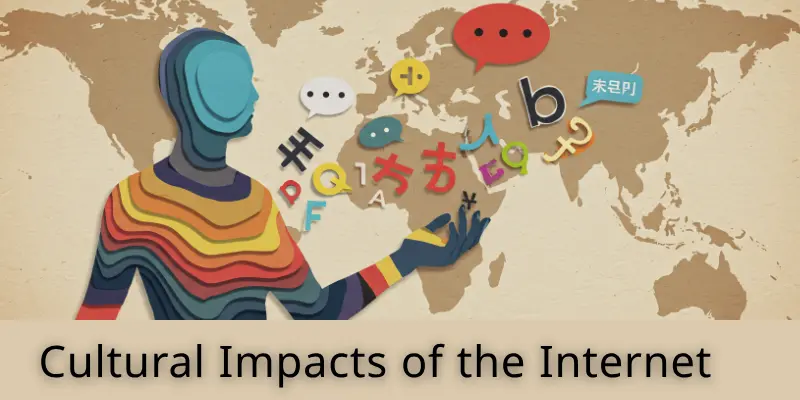
2. Cultural Impacts of the Internet
The Internet shapes culture in powerful ways. It influences how people express themselves, share traditions and discover new ideas. I see these changes in the way global trends spread and how local customs blend with digital habits. As culture moves online, it grows, shifts and sometimes even transforms completely.
The impact of the Internet on culture can be understood through several key aspects:
- Cultural Exchange and Globalization
- Rise of Internet Culture
- Cultural Commodification and Dilution
- Identity, Values and Norms
Cultural Exchange and Globalization
Cultures spread faster through the Internet. People explore music, films, food, languages and traditions from across the world. This exposure encourages cultural understanding and reduces stereotypes. Smaller cultures also gain visibility online.
The mixing of global ideas shows how the Internet creates cultural bridges.
- Access to global art and traditions increases cultural awareness
- Online platforms promote cross-cultural dialogue
- Local artists can share their work with global audiences
Rise of Internet Culture
A new type of culture exists online. Memes, trends, online humor and digital art shape how people communicate. Younger generations often identify more with online communities than with local traditions. Internet culture evolves fast and spreads at high speed.
This growing digital culture adds new layers to traditional identity.
- Memes shape how people express emotions and opinions
- Online trends influence fashion, music and lifestyle
- Digital communities create shared norms and inside jokes
Cultural Commodification and Dilution
As cultural items go online, they are sometimes simplified or turned into products to attract global attention. Traditions may lose meaning when taken out of context. This can create misunderstandings or weaken cultural depth.
The Internet increases visibility but also risks reducing cultural authenticity.
- Traditional practices may be commercialized online
- Misuse of cultural symbols becomes more common
- Viral content often removes deeper cultural meaning
Identity, Values and Norms
People often explore different identities online. They join communities that influence their beliefs, values and lifestyle choices. This is especially common among youth who grow up with the Internet. Online interactions expose people to new viewpoints that shape attitudes.
Digital identity is becoming as important as physical identity.
- Social media affects self-image and confidence
- Online discussions influence personal beliefs
- Youth adopt global values blended with local traditions
3. Economic, Educational and Institutional Effects
The Internet affects more than just social and cultural life. It also changes how people work, learn and interact with major institutions. I notice this shift in the rise of online businesses, digital classrooms and new ways of accessing services. These changes shape opportunities, skills and the systems we depend on every day.
The Internet’s influence on modern society can also be seen in the following major areas:
- Impact on Business and Work
- Education and Knowledge Dissemination
- Media and Information Ecosystems
Let’s break down these concepts for better understanding.
Impact on Business and Work
The Internet created new job markets and reshaped business models. E-commerce, freelancing and remote work allow people to earn without traditional workplaces. Small businesses reach global buyers through online platforms.
This digital shift opens more opportunities for flexible income and innovation.
- Online marketplaces support small and global businesses
- Freelancing and remote work offer flexible options
- Digital tools improve productivity and customer reach
Education and Knowledge Dissemination
Education became more accessible with online learning. Students and professionals can join classes from anywhere. Digital tools help teachers and learners collaborate more efficiently. This makes education more inclusive and adaptable.
The Internet supports continuous learning for every age group.
- Virtual classrooms support remote education
- Online degrees and certificates expand opportunities
- Learning platforms make studying more convenient
Media and Information Ecosystems
Traditional media now shares space with digital creators. Bloggers, influencers and online journalists shape public opinion. People choose information based on personal interests instead of local media sources.
This shift changes who controls information and how quickly it spreads.
- Social platforms compete with TV and newspapers
- Independent creators influence modern opinion
- News spreads faster but may lack verification
4. Challenges and Negative Consequences
The Internet gives us many advantages, but it also brings real challenges that we can’t ignore. I see these issues in the way people struggle with misinformation, cultural loss and growing dependence on digital spaces. These problems affect our relationships, mental health and even the balance of our communities. Understanding these challenges helps us deal with them more responsibly.
- Cultural Homogenization
- Misuse of Cultural Elements
- Social Isolation and Mental Health Concerns
- Misinformation and Digital Divide
Cultural Homogenization
Global content sometimes overshadows local traditions. Popular cultures, especially Western trends, dominate online spaces and reduce cultural variety. This leads to a more uniform global lifestyle.
The loss of diversity becomes a major concern as cultures merge.
- Local traditions face competition from global trends
- Youth often prefer global content over heritage
- Cultural variety may decline over time
Misuse of Cultural Elements
When cultural items go viral, they can be misused or taken out of context. This leads to cultural appropriation, misunderstanding or disrespect. Without proper knowledge, online trends may distort cultural meaning.
This misuse weakens authenticity and creates social tension.
- Cultural symbols may be copied without permission
- Viral trends often ignore cultural context
- Misrepresentation can harm cultural identity
Social Isolation and Mental Health Concerns
Spending more time online can reduce real-world interactions. People may feel lonely even while being socially active online. Constant comparisons, digital pressure and lack of physical contact affect emotional health.
This makes mental wellbeing a serious issue in the digital age.
Points to note:
- Online friendships may not replace physical support
- Excessive screen time affects mental balance
- Social comparison on social media increases stress
Misinformation and Digital Divide
Misinformation spreads quickly and creates confusion. Not everyone has the skills to verify sources. At the same time, the digital divide keeps disadvantaged groups away from online benefits.
This creates inequality in knowledge and opportunities.
Key facts:
- False news spreads faster than real information
- People may fall into echo chambers
- Poor internet access widens social gaps
5. Balancing the Effects: Opportunities and Risks
To get the most benefits from the Internet, people need digital literacy, awareness and responsible use. Governments and organizations must promote safe practices, protect cultural diversity and control misinformation. Individuals can also make conscious choices.
Balancing use helps society progress without losing cultural and social values.
Best practices include:
- Promoting critical thinking
- Supporting local cultures online
- Encouraging healthy Internet habits
6. Future Outlook
The Internet will continue to shape society and culture. More people will join digital spaces and new technologies will influence identity, values and communication. Cultures may blend further, but many communities will find ways to protect tradition.
The future depends on how societies manage technology while respecting cultural roots.
- Rapid growth of digital communities
- Hybrid cultural identities
- Stronger connection between online and offline life
Conclusion
In this guide, we have covered the effect of the Internet on society and culture. From communication to culture, education, and challenges, it touches almost every part of our lives. I recommend using the Internet thoughtfully, enjoying its benefits while staying aware of its influence on relationships, culture, and daily habits.
Thank you for reading and taking time to understand this important topic. Make sure to read the next part of the FAQs. There’s more useful information ahead, and you won’t want to miss it.
FAQs
After reading about the effect of the Internet on society and culture, you might have some questions. Here are the most common questions and answers to help you understand these changes better.
The Internet connects people across the world, making communication fast and easy. It allows learning from online resources and opens doors to cultural exchange. People can share music, art, and traditions with others everywhere.
Yes, popular global trends sometimes overshadow local traditions. Young people may prefer international content over local customs. This can reduce the visibility of unique cultural practices.
Online courses, tutorials, and articles make learning accessible to everyone. Students and professionals can study from anywhere. It allows flexible learning beyond traditional classrooms.
The Internet spreads false information quickly. People can be misled about health, culture, or news. Always verify sources before trusting information.
Spending too much time online can reduce face-to-face interactions. People may feel lonely even with many online friends. It can increase stress and comparison between individuals.
The Internet has transformed the way people work and earn money in many ways, including:
- Supports remote work and freelancing
- Helps small businesses reach global customers
- Offers flexible ways to earn income
The Internet creates new opportunities and reshapes traditional jobs.
Online trends, memes, and digital content influence daily life more than before. Many people, especially youth, follow online trends over local customs. This changes how society values its traditions.
Yes, not everyone has equal access to fast Internet. Those without access miss out on education, jobs, and cultural content. This digital divide can widen social gaps. It also limits opportunities for people to fully participate in the modern digital world.
The internet has changed the world by making information easy to access and share. It has improved communication, business, education, and entertainment. Today, it connects people across the globe and shapes how we live and work every day.
Yes, its influence will grow as more people join online spaces. It will change how we communicate, learn, and share culture. The effect will depend on how wisely we use it.
The internet has changed society by transforming how people communicate, learn, and share information. It has created new ways to build communities, access services, and express ideas. This shift has reshaped daily life, making the world more connected than ever.
The internet affected society by changing how people communicate, learn, and interact. It created new spaces for social connection, work, and entertainment. These changes have made daily life faster, more connected, and more dependent on digital tools.


- Be Respectful
- Stay Relevant
- Stay Positive
- True Feedback
- Encourage Discussion
- Avoid Spamming
- No Fake News
- Don't Copy-Paste
- No Personal Attacks
- Be Respectful
- Stay Relevant
- Stay Positive
- True Feedback
- Encourage Discussion
- Avoid Spamming
- No Fake News
- Don't Copy-Paste
- No Personal Attacks
